

Here is one of the most expensive surprises in home insurance: water destroyed your floors, and whether your policy pays depends not on how bad the damage is, but on which direction the water came from.
Homeowners learn this at the worst possible moment — after the loss, when the insurance company says the word "flood" and the claim changes completely. This article explains the difference in plain terms, why it exists, and why insurers and policyholders end up fighting over it.
The short version
Standard homeowners policies generally cover sudden, accidental water damage that starts inside or above your home: a burst pipe, a failed water heater, a washing machine hose letting go, rain entering through a storm-damaged roof.
What they generally exclude is flood: water that rises from outside and enters at ground level — overflowing rivers, storm surge, heavy rain pooling and flowing in, mudflow. Covering flood usually takes a separate flood policy, most commonly through the National Flood Insurance Program (NFIP) or a private flood insurer.
Same soaked drywall. Same ruined floor. Different water path — different policy, different outcome.
Why the line exists at all
It is not arbitrary. Flooding tends to hit whole neighborhoods at once, producing enormous concentrated losses that standard homeowners policies were never priced to absorb. So the industry drew a line: interior water events on the homeowners policy, rising outside water on separate flood coverage.
Reasonable in theory. In practice, the line runs straight through real-world storms — which is where homeowners get hurt.
Where it gets messy: storms bring both kinds of water
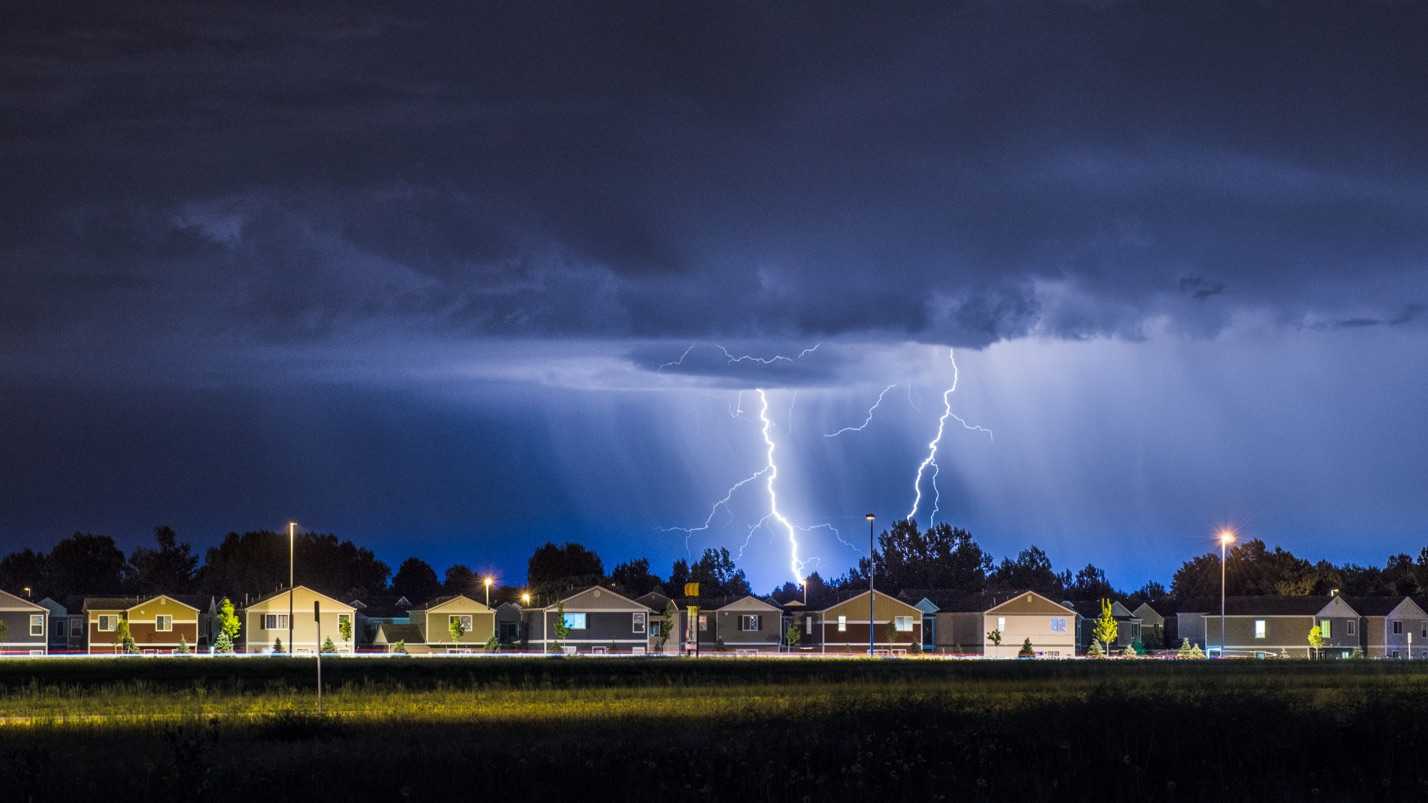
Picture a hurricane. Wind tears shingles off, and rain pours through the roof — that is wind-driven water damage, generally a homeowners claim. Meanwhile storm surge pushes water in at the ground floor — that is flood, generally excluded from the homeowners policy.
Now the hard question: your home has water damage from both directions, and the two policies point at each other. Which damage came from which water? The answer decides who pays for what — and it is one of the most disputed questions in property insurance.
It matters most for homeowners without flood coverage. If everything gets labeled "flood," the homeowners claim can shrink toward nothing — even when wind and rain did real, covered damage first.
Other lines that surprise people
A few more distinctions worth knowing before you need them:
- Sudden versus gradual: a pipe that bursts is typically covered; a pipe that seeped for months often is not. Insurers use "long-term leakage" to deny claims, and the call is frequently debatable.
- Sewer and drain backup: water backing up through drains usually needs its own endorsement — check your policy for it now, not after.
- Groundwater seepage through a foundation is generally treated as excluded, even though it feels like a plumbing problem.
- The damage the water causes versus the thing that failed: policies often pay for the water damage but not for replacing the failed pipe or appliance itself.
What to do when water hits your home
Whatever the source, the first moves are the same. Stop the water if you safely can. Photograph and video everything — the damage, the water line, and especially the path the water took. Evidence of where the water came from is exactly what these disputes turn on, and it dries up fast.
Save damaged materials where safe, keep receipts for emergency work, and report the claim promptly with plain facts. If you are not sure what caused what, say so — do not guess "flood" or "leak" on the phone. Your words get written down, and the label matters more than most homeowners know.
When the label becomes the fight
If your insurer calls your water damage "flood," "seepage," or "gradual" and your claim shrinks or dies on that word, remember: that label is a judgment call built from their inspection, and judgment calls can be challenged with better evidence.
This is core public adjusting work. UPA independently inspects the damage, documents the water's actual path and timeline, separates covered damage from excluded damage, and re-presents the claim with the evidence to support it. The wind-versus-flood and sudden-versus-gradual questions are exactly where independent documentation changes outcomes.
UPA is a 501(c)(3) non-profit public adjusting firm, and we never take a penny out of a property or business owner's pocket — our fee is covered by the overhead and profit built into the insurance settlement itself. If a water claim has gone sideways on you, call 1-855-944-3473.
How to read your own policy for water coverage
You do not need to be an insurance expert to learn a lot from your own policy. Pull out the full document — not just the declarations page — and look for three things.
First, find the water-related exclusions section. This is where flood, surface water, groundwater, seepage, and sewer backup language lives. Read it slowly; the words are chosen carefully, and so should your understanding of them be.
Second, look for any endorsements listed on your declarations page. Endorsements add coverage back — a sewer backup endorsement or limited water damage coverage changes what your policy actually does.
Third, note your deductibles. Some policies carry separate, larger deductibles for wind or hurricane losses than for other perils, which changes the math on a storm claim.
If the language is confusing, that is normal — these documents are written by lawyers for lawyers. Reading your policy with you is part of what a public adjuster does, and with UPA that review costs nothing.
Before the next storm: two things to check today
First, find out whether you have flood coverage. Do not assume — look for a separate flood policy or ask your agent directly. Standard homeowners policies generally do not include it, and flood policies typically have waiting periods, so the time to buy is before the storm is on the map.
Second, look for a sewer/water backup endorsement on your homeowners policy. It is one of the most useful add-ons a homeowner can carry, and one of the most commonly missing.
Keep Reading
Claim Denied or Underpaid? UPA Can Help
UPA is a 501(c)(3) non-profit public adjusting firm. If a loss like this one left you with a denied claim or a settlement that didn't cover the damage, we document the loss and fight for the full amount your policy owes — at no cost out of pocket.